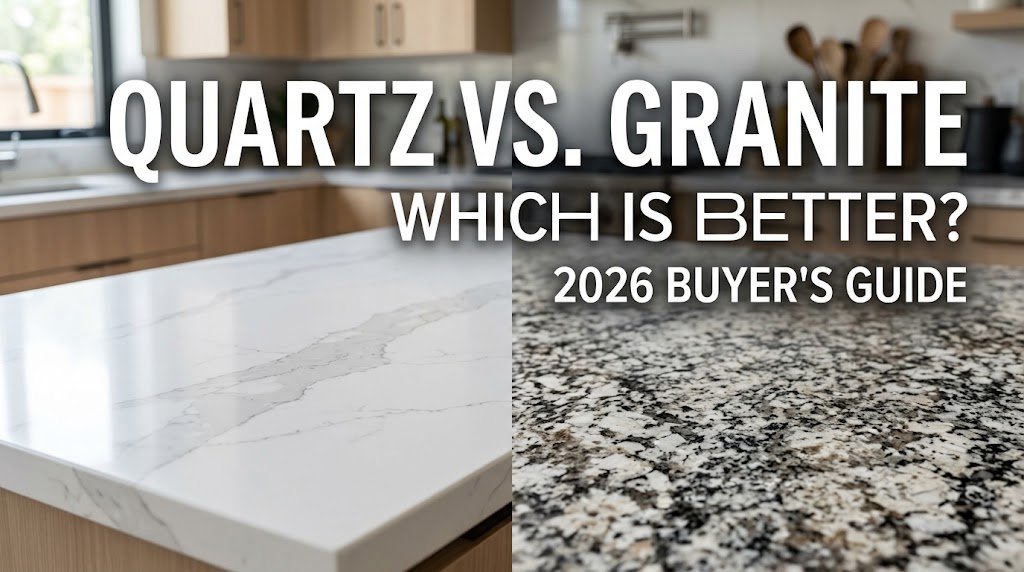
Quartz vs. Granite Countertops: Which Is Better?
Selecting the perfect surface for your kitchen remodel often comes down to the industry’s two most dominant heavyweights: quartz and granite. Because countertops serve as both the functional workbench and the primary visual anchor of your culinary space, making an informed decision is critical. When comparing quartz vs granite countertops, homeowners must evaluate not just the initial aesthetic appeal, but also long-term maintenance requirements, heat tolerance, and overall return on investment.
While both materials deliver premium durability and instantly elevate a home’s resale value, they are engineered and maintained in fundamentally different ways. This commercial investigation breaks down the structural differences, 2026 installation costs for both USA and UK homeowners, and the lifestyle factors that dictate which material is the superior choice for your next renovation.
The Core Differences: Nature vs. Engineering
To understand how these countertops will perform in your kitchen, you must first understand how they are sourced and manufactured.
-
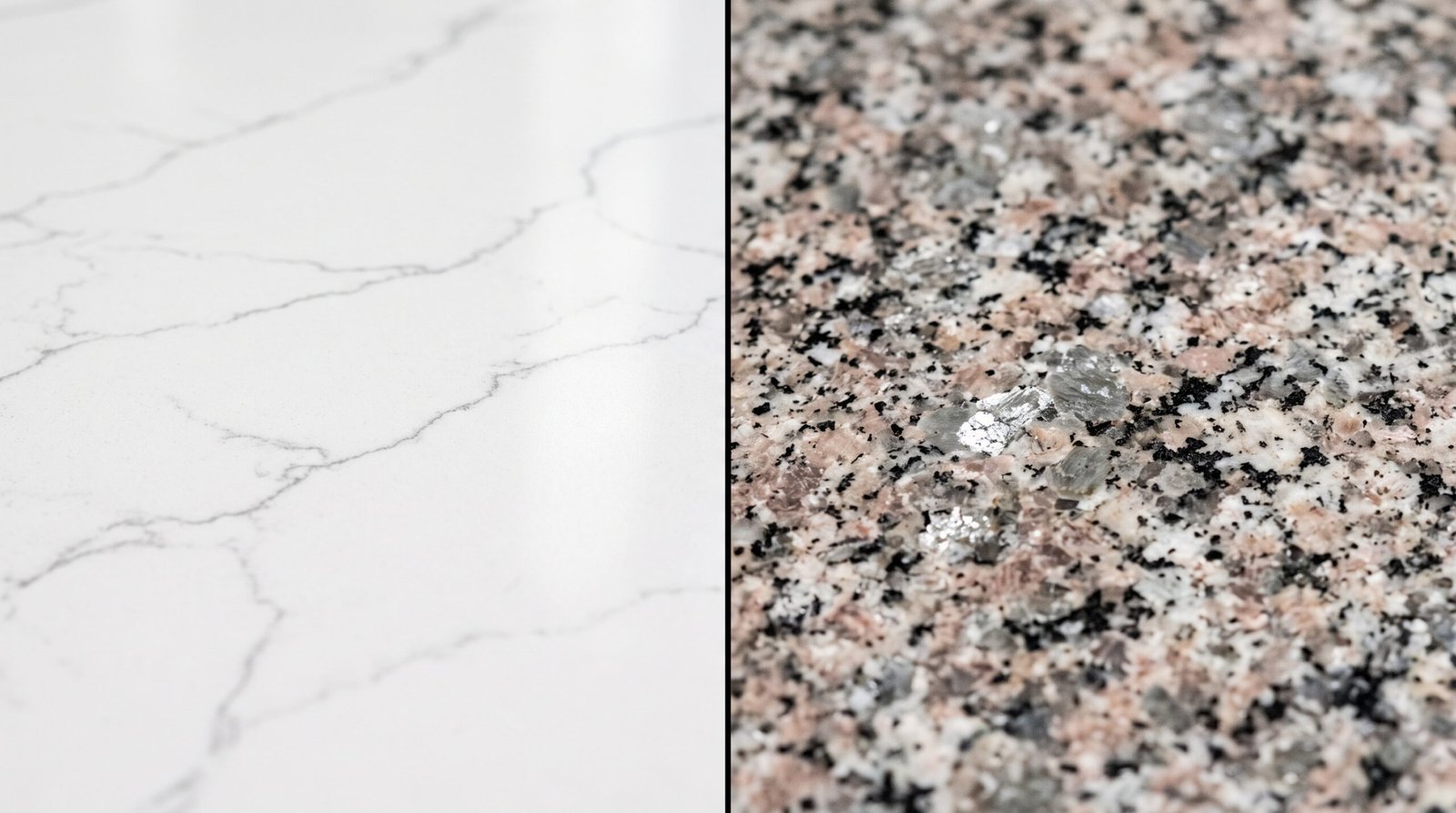
Granite (100% Natural Stone): Granite is an igneous rock formed over millions of years from cooling magma deep within the earth’s crust. It is quarried in massive blocks, sliced into slabs, and polished. Because it is a product of nature, every single granite slab is entirely unique, featuring unpredictable mineral patterns, varied veining, and distinct color depths.
-
Quartz (Engineered Stone): Quartz countertops are a man-made composite material. They are manufactured by crushing natural quartz crystals (making up roughly 90% to 94% of the slab) and binding them together with polymer resins and color pigments under intense heat and pressure. This manufacturing process allows for completely uniform patterns and the ability to mimic high-maintenance stones like Carrara or Calacatta marble.
Your countertop choice must work in harmony with your cabinetry. Heavy natural stone slabs require robust structural support, so it is vital to select high-quality base cabinets. For detailed specifications on structural box integrity, review our kitchen cabinets buying guide, and for deeper insights into wood species and manufacturing tiers, consult kitchen cabinets: the ultimate buyer’s guide for homeowners in the USA.
Durability and Daily Maintenance
When investing in premium kitchen countertops, ease of maintenance is often a deciding factor for busy households.
Porosity and Staining
Granite is naturally porous. Without adequate protection, spilled liquids like red wine, coffee, or citrus juice can seep into the microscopic pores of the stone, causing permanent discoloration. To prevent this, granite countertops require professional sealing upon installation and routine re-sealing every 12 to 24 months.
Quartz, due to its resin binder, is entirely non-porous. It never requires chemical sealing and is virtually impervious to common household stains. This makes quartz an exceptionally hygienic surface, as bacteria and viruses cannot harbor within the material.
Chip and Scratch Resistance
Both materials score exceptionally high on the Mohs hardness scale, making them highly resistant to scratches from everyday utensils. However, because quartz is engineered with flexible polymer resins, it is slightly more resistant to chipping or cracking upon heavy impact (such as dropping a cast-iron skillet on the edge) compared to the rigid, crystalline structure of natural granite.
For inspiration on how to seamlessly integrate these durable surfaces into contemporary layouts, explore our 15 modern kitchen remodeling ideas for your home and our broader gallery of kitchen remodeling ideas.
Heat Tolerance: Where Granite Excels
If you frequently transfer hot pots and pans directly from the stove to the counter, granite holds a distinct advantage. Because it was forged in volcanic heat, granite is incredibly heat resistant and can withstand direct contact with hot cookware without scorching.
Quartz countertops are heat resistant, but they are not heat-proof. The polymer resins used to bind the quartz crystals can begin to melt or discolor if exposed to sudden, extreme temperatures (typically above 300°F or 150°C). Placing a hot baking sheet directly onto a quartz surface can leave a permanent, cloudy burn mark, meaning the use of trivets is strictly mandatory.
2026 Cost Comparison: USA vs. UK Pricing
A comprehensive countertop comparison must include realistic budgeting expectations. The prices for both materials heavily overlap, meaning one is not inherently cheaper than the other. The final cost depends heavily on slab thickness, edge profiling, cutouts for sinks, and the rarity of the pattern.
USA Average Countertop Costs (2026)
In the US market, both materials sit comfortably in the premium category:
-
Quartz Countertops: Typically range from $60 to $120 per square foot installed. Basic designs sit at the lower end, while complex slabs mimicking rare marbles push toward the top.
-
Granite Countertops: Generally range from $50 to $100 per square foot installed for standard colors. However, rare, exotic, or heavily veined imported granite slabs can easily exceed $200 per square foot.
UK Average Countertop Costs (2026)
In the UK market, costs are traditionally calculated per square metre (m²) inclusive of supply and installation:
-
Quartz Countertops: Supply and installation costs average £375 per m², with a typical range between £200 and £550 per m².
-
Granite Countertops: Supply and installation costs average £435 per m², with a typical range between £270 and £600 per m².
-
Note on UK Extras: In the UK, budget for hidden fabrication costs such as polished cutouts for undermount sinks (averaging £185 each) and drainer grooves (averaging £150 per set).
To see how these specific countertop materials impact your total renovation budget, review our line-item breakdown of the overall kitchen remodel cost and explore geographic pricing variances in our guide to understanding kitchen remodel costs in 2026.
Side-by-Side Pros and Cons
| Feature | Quartz Countertops | Granite Countertops |
| Maintenance | Low. Never requires sealing; non-porous. | Moderate. Requires annual or bi-annual chemical sealing. |
| Appearance | Uniform, consistent patterning; modern aesthetic. | 100% unique; natural, earthy, and unpredictable variations. |
| Heat Resistance | Moderate. Resins can scorch; trivets required. | Excellent. Can easily withstand hot pots and pans. |
| Stain Resistance | Excellent. Highly resistant to wine, oil, and acid. | Good. Resists stains only if the sealant is maintained. |
| UV Resistance | Poor. Can fade or discolor in direct, prolonged sunlight. | Excellent. Suitable for outdoor kitchens and sunny windows. |
| Seams | Easier to hide due to consistent, engineered patterns. | Seams can be visible due to shifting natural mineral veins. |
Making the Right Choice for Your Home
The debate between quartz vs granite countertops does not yield a universally superior winner. The correct choice depends entirely on your lifestyle, aesthetic preferences, and tolerance for maintenance.
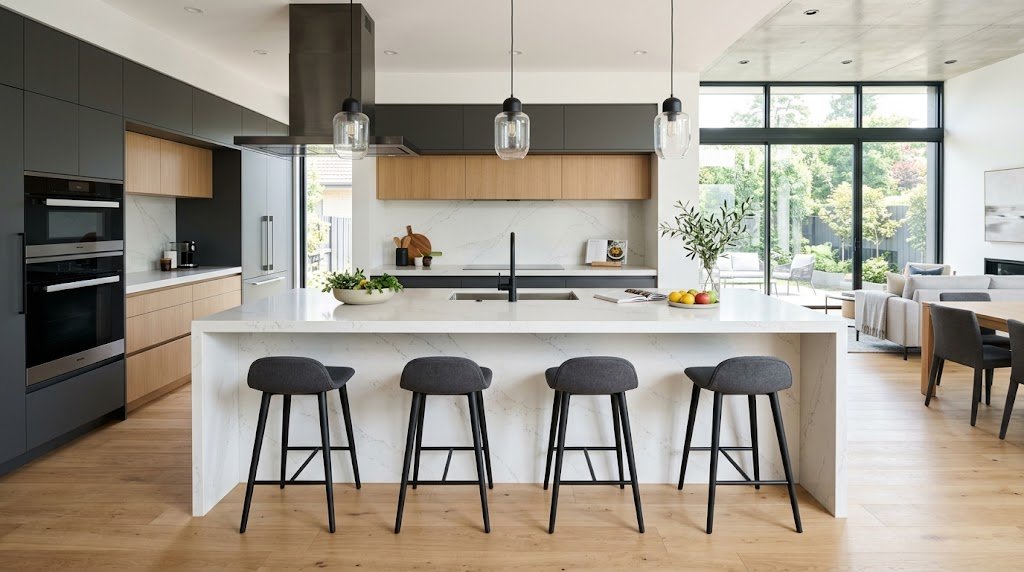
Select quartz if you desire a crisp, modern, or minimalist kitchen design with a highly predictable pattern and a completely maintenance-free surface that never requires sealing. Alternatively, choose granite if you appreciate the timeless, organic beauty of a one-of-a-kind natural stone, are an avid cook who wants the freedom to place hot pans directly onto the counter, or are installing an outdoor kitchen flooded with intense, direct sunlight.